
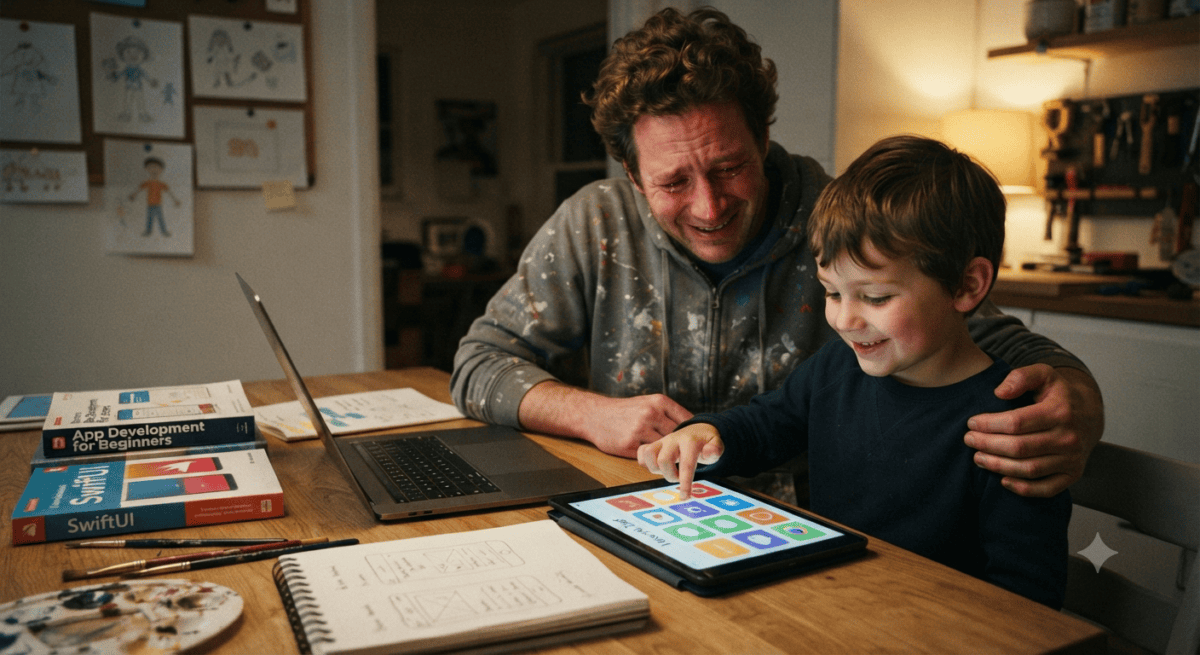
A house painter stood in his kitchen at midnight with paint still drying on his knuckles. His six-year-old son had been asleep for hours. Down the hall, the boy rested quietly without speaking a single word, just like every other night since he was a toddler. Speech is something most parents take for granted from the moment a baby babbles. When your child is non-verbal, every quiet morning carries a heavy weight. You watch them reach for a glass of water, point at the backyard, or tug at your sleeve, and you feel the gap between what is inside their mind and what they can share out loud. For this father, closing that gap had become the most important mission of his life.
He had already researched dedicated communication devices. Those specialized tablets and augmentative communication systems can cost thousands of dollars once you add durable cases, mounting arms, software licenses, and support plans. Running a small house-painting business meant income went up and down with the weather, seasons, and client schedules. Paying off a loan for a medical-grade device felt out of reach when groceries, utility bills, and everyday expenses came first. Still, he refused to accept that his son had to wait years or go without a voice simply because specialized hardware came with a luxury price tag.
If he could not buy the right tool, he decided he would build one himself. He had never written real software before. His hands knew how to sand trim, cut clean lines along baseboards, and roll primer onto drywall without leaving streaks. Coding looked like another language written in brackets and logic. Yet late-night frustration can be a powerful teacher. After coming home tired from jobsites, washing paint from his arms, and eating a quick dinner, he opened his laptop at the kitchen table and started from scratch.
At first, the screen made very little sense. Error messages popped up over small typos. Layouts shifted out of place. Buttons did not respond when tapped. A less determined person might have closed the lid after an hour and gone to bed. Instead, he treated programming the same way he treated prep work before painting a room. You do not rush straight to the finish coat. You scrape the rough spots, fill the cracks, smooth the surface, and build layer by layer until the result holds up. Every night, he read documentation, watched tutorials, tested small pieces of code, and fixed what broke.
Slowly, a basic idea took shape on his screen. A non-verbal child often communicates best through clear visual choices paired with spoken sound. If his son could tap a large, simple picture on a screen and hear a clear voice speak that word or phrase aloud, everyday life could change. Wanting a snack would not require guessing games. Asking for help or naming a favorite toy would become direct and fast. Most importantly, his son could express feelings that had stayed locked behind silence.
Designing for a six-year-old meant thinking carefully about every detail. Tiny buttons would be hard to tap with small fingers. Cluttered menus would overwhelm a child trying to focus. Colors needed to be calm and distinct rather than noisy and distracting. The layout had to stay consistent so his son could build muscle memory and trust where each tile lived. The father tested ideas on his laptop, adjusted button sizes, simplified navigation, and listened closely to how each tap sounded when spoken out loud.
There were nights when progress felt invisible. A feature that worked in theory failed on a real screen. A sound file played late or cut off too soon. Tired eyes burned under the kitchen light while the rest of the neighborhood slept. Whenever doubt crept in, he pictured his son trying to explain something important and running out of ways to show it. That image kept the coffee warm and kept his fingers moving across the keyboard.
Months of late nights turned into a working prototype. It was not a commercial product polished by a giant tech company. It was a personal, practical visual communication board built by a dad who cared enough to learn a brand-new skill from zero. He loaded familiar images, organized simple phrases, and set up the voice output so tapping a card spoke clearly right away.
The real test came when he sat beside his son and introduced the board without pressure. There was no dramatic speech or stiff lesson. Just a father and a son sitting together, exploring simple taps and listening to the screen speak words out loud. His son watched closely, tapped a picture, heard the voice respond, and began to connect cause and effect. A smile spread across the boy's face as the bridge between thought and expression started opening up.
Then came the moment the father will never forget. His son navigated the visual board, found the right selections, and tapped the message that said I love you, Dad. The tablet spoke the words out into the room. For a father who had spent years listening to silence and hoping for connection, hearing those four words delivered through his own hand-coded tool hit straight to the heart. No expensive commercial gadget could have carried more meaning than that moment.
Stories like this resonate so deeply because they blend grit, love, and everyday ingenuity. You do not need a computer science degree or a massive budget to solve a real problem in front of you. Sometimes the most meaningful technology starts at a kitchen table with a tired parent, a steep learning curve, and a refusal to give up on their child.


